
close
Choose Your Site
Global
Social Media
Views: 123 Author: Site Editor Publish Time: 2026-05-10 Origin: Site


The sustainable management of forest resources has evolved into a sophisticated industrial discipline, driven by the global demand for carbon-neutral thermal energy. Forestry residues, including bark, branches, and logging leftovers, represent a vast untapped energy reservoir. However, the inherent variability in moisture content and physical dimensions often hinders the efficient conversion of these materials into high-quality fuel. To overcome these logistical and technical barriers, stakeholders now prioritize integrated engineering frameworks. Implementing Customized Pellet Production Line One-Stop Solutions ensures that every stage of the process, from primary reduction to final densification, functions as a cohesive unit. BISON MACHINE (SHANDONG BISON MACHINE CO., LTD.) provides the technical leadership necessary to navigate this transition. By aligning mechanical precision with the biological realities of forest biomass, these solutions transform volatile residues into standardized industrial assets.
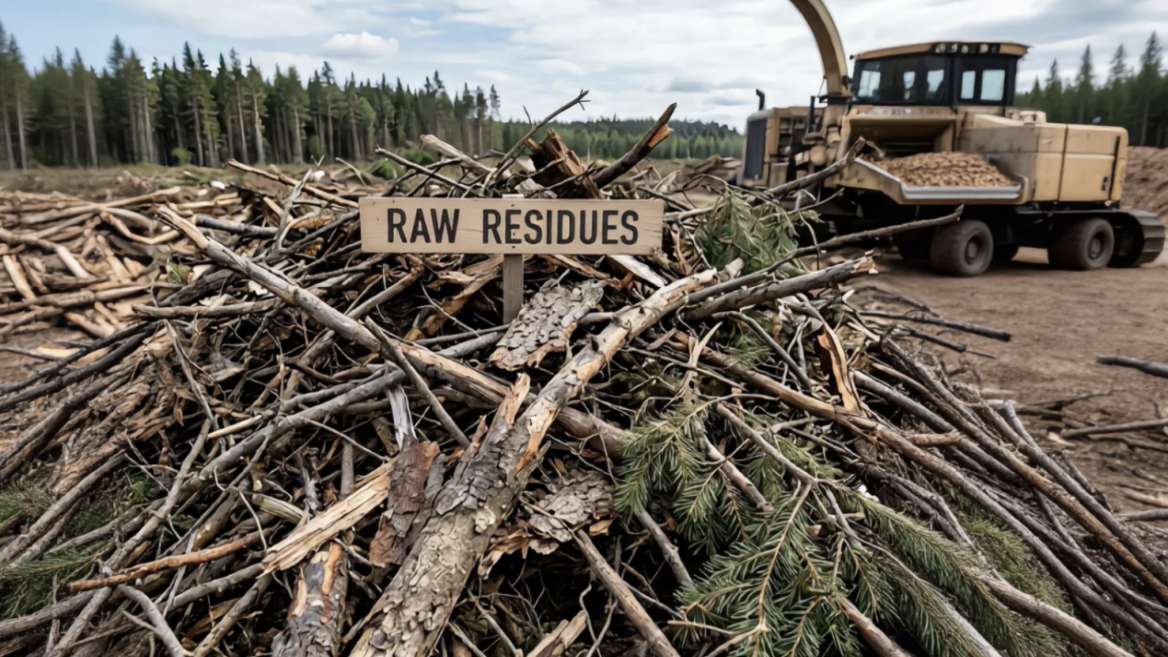
The first technical hurdle in forestry waste recovery involves the physical reduction of non-uniform feedstock. Forest floors often yield Log & Large Wood that varies significantly in density and size. Without effective geometric standardization, downstream machinery faces irregular loads, leading to premature mechanical failure and inconsistent pellet quality. Therefore, a robust primary crushing system must act as the gateway for the entire production line. This stage requires heavy-duty cutting technology that can process varying timber species without losing throughput speed.
BISON MACHINE addresses this requirement by integrating high-torque drum chippers into the initial processing phase. These machines slice large logs into uniform chips, which then move to secondary hammer mills for fine grinding. This two-stage reduction ensures that the fiber size remains consistent, a critical factor for achieving high pellet durability. By synchronizing the chippers with the rest of the facility, the manufacturer eliminates the structural bottlenecks often found in fragmented production lines. This engineering foresight allows for a smooth transition from raw timber to a processable fiber matrix.
Forestry biomass often arrives at the facility with moisture levels exceeding 50 percent, particularly when bark and green wood are present. Excess moisture absorbs the compression energy generated by friction inside the pelleting chamber and prevents the temperature rise necessary to plasticize lignin, making stable pellet formation impossible. Conversely, overly dry material results in brittle pellets that disintegrate during transport. Managing this thermodynamic variance is essential for maintaining a stable moisture window of 10% to 15%. Precision drying technology must therefore adapt to the specific sap content and density of the local wood supply.
Customized one-stop solutions incorporate rotary drum dryers that control material moisture indirectly through calibrated outlet temperature and material residence time inside the drum. Operators verify final moisture content through periodic sampling and offline moisture meters, adjusting drying parameters between production batches based on these readings. BISON MACHINE (SHANDONG BISON MACHINE) configures the drying process to preserve the chemical integrity of the wood fibers while removing excess water. By achieving moisture equilibrium before the material enters the pellet mill, the system prevents common issues like pellet cracking or internal fermentation during storage. This thermodynamic control directly impacts the final caloric value of the fuel, ensuring it meets strict industrial standards.
Processing high-density hardwoods like eucalyptus or resinous softwoods requires significant mechanical force. The high fiber density and mechanical resistance of these species demand substantial compression force to achieve the desired pellet density and durability. When operating at a scale of 9 to 12 tons per hour (TPH), the structural integrity of the pellet mill becomes the primary determinant of project success. A high-capacity 9-12 TPH Production Matrix must deliver consistent torque while managing the heat generated by intense friction.
The XGJ Series Pellet Machine utilizes a vertical ring die design to handle these demanding industrial cycles. This configuration allows the material to feed evenly into the compression zone, utilizing gravity to prevent fiber accumulation. SHANDONG BISON MACHINE engineers these units with reinforced gearboxes and high-specification alloy dies to withstand the continuous stress of hardwood processing. By deploying multiple machines in a modular matrix, the system maintains high output levels even during routine maintenance of a single unit. This high-torque logic ensures that large-scale forestry concessions can maintain a reliable supply of premium pellets for the global energy market.

Forestry waste often contains non-woody contaminants such as soil, sand, and small stones collected from the forest floor. These impurities act as abrasives, rapidly eroding the surfaces of the ring dies and rollers. Furthermore, fine dust generated during the chipping process can pose explosion risks and reduce the purity of the final product. Effective systemic refinement requires integrated sifting and aspiration systems that remove these hazards before the final densification stage.
Sophisticated one-stop solutions prioritize impurity management through a series of automated screens and magnetic separators. These components protect the high-value XGJ Series machinery from internal damage and ensure the final pellets meet low-ash requirements. By maintaining high purity levels, the facility produces pellets that are safer for industrial boilers and more efficient in combustion. This attention to systemic refinement reflects a commitment to industrial excellence, where the focus extends beyond simple compression to the delivery of a refined energy product.
The long-term success of a forestry-to-energy project depends on the manufacturer's commitment to technical stewardship. Professional site auditing ensures that the production line configuration matches the specific environmental conditions and material profiles of the timber concession. This comprehensive approach reduces operational risk and provides investors with a bankable production blueprint. Without such stewardship, projects often face technical isolation and suboptimal performance during the initial ramp-up phase.
The Service Scope provided by SHANDONG BISON MACHINE CO., LTD. includes onsite engineering support, PLC system calibration, and technical personnel training. These services transform a collection of machinery into a high-functioning industrial ecosystem. By providing standardized wear-part logistics and remote diagnostics, the manufacturer ensures that the facility maintains its 24/7 operational continuity. This level of professional oversight secures the industrial off-take agreements necessary for the project's financial viability. Technical stewardship acts as the final link in the value chain, converting a capital investment into a resilient energy asset.
Transforming forestry residues into standardized bioenergy is a technical challenge that demands a holistic engineering strategy. Success in this sector requires a balance between raw material volatility and mechanical stability. By integrating precision crushing, thermodynamic control, and high-torque pelleting, customized solutions provide a reliable path toward industrial resource recovery. The systematic management of impurities and the commitment to technical stewardship further ensure that the final product meets the highest global standards.
BISON MACHINE (SHANDONG BISON MACHINE) continues to drive innovation in the forestry biomass sector through its integrated one-stop solutions. The combination of the robust XGJ series and a comprehensive service framework allows stakeholders to maximize the value of their forest concessions. As the global shift toward renewable energy accelerates, the ability to monetize forestry waste efficiently will become a key competitive advantage. Partnering with an expert who understands the complexities of forest logistics and mechanical engineering is the most critical step toward long-term operational success.
For more information on customized biomass solutions and industrial pellet technology, please feel free to contact us.


