
close
Choose Your Site
Global
Social Media
Views: 165 Author: Site Editor Publish Time: 2026-05-02 Origin: Site


Global energy security increasingly relies on the successful integration of large-scale biomass production into the renewable power grid. As industrial energy suppliers transition away from fossil fuels, the demand for consistent, high-density wood pellets has reached an unprecedented peak. However, scaling production to meet these requirements presents significant mechanical and operational hurdles for plant managers. Most large-scale facilities lose between 8% and 15% of theoretical output to operational instability — a margin that translates into thousands of tons of missed production annually. Achieving the necessary output without compromising equipment longevity requires the implementation of Professional Pellet Machine Solutions built around verified engineering variables rather than headline capacity figures. Manufacturers such as BISON MACHINE (SHANDONG BISON MACHINE CO., LTD.) have built integrated systems specifically to address these inefficiencies at industrial scale.
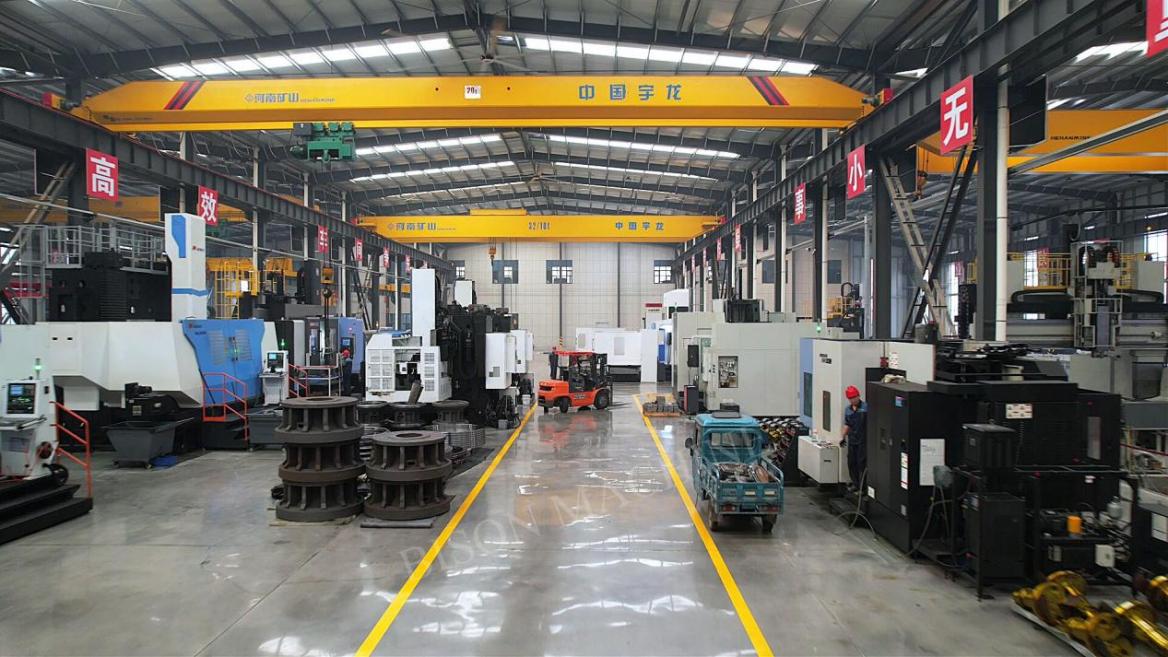
Large-scale biomass plants operate under a different set of economic rules compared to small-scale workshops. In a high-volume supply environment, even a one-percent drop in production efficiency can result in thousands of tons of missed output annually. In practice, plant managers running 50,000 to 200,000 TPY operations consistently report the same three operational pain points.
The first is unstable feed rate. When biomass enters the pellet mill in surges rather than a continuous flow, motor current fluctuates between 65% and 110% of rated load, triggering protective shutdowns several times per shift.
The second is heat accumulation inside the ring die. In poorly designed systems, die surface temperatures climb above 110°C during sustained high-load operation. At this threshold, lignin begins to char rather than bond, producing weaker pellets and accelerating die wear by an estimated 30% to 40%.
The third is unplanned downtime cascading from minor mechanical faults. A worn roller bearing, a clogged conditioner, or a misaligned feeder can take an entire production line offline for 4 to 8 hours. For a plant producing at 12 tons per hour, each shutdown represents 48 to 96 tons of lost output.
Beyond these three pain points, large-scale power plants demand pellets with uniform moisture content, caloric value, and structural integrity. Achieving this uniformity at scale requires more than high-power motors — it requires a deep understanding of material flow and the thermal dynamics of the compression process. Plants that experience two preventable shutdown events per week typically lose between 5,000 and 10,000 tons of annual production capacity to issues that proper engineering design could eliminate.
Many operators respond to capacity shortfalls by simply expanding their equipment fleet. However, parallel expansion without addressing upstream synchronization rarely delivers the expected output gains. A common scenario illustrates the problem: a 50,000 TPY plant operating at 78% utilization adds a third pellet mill, expecting to push throughput to 75,000 TPY. Six months later, actual output stabilizes at 58,000 TPY — far below the projected uplift.
The root cause lies in upstream equipment imbalance. If the dryer cannot consistently deliver feedstock at 10-15% moisture, or if the hammer mill cannot maintain uniform 10 mm particle size, additional pellet mills simply share the same constrained input stream. Adding machines without expanding pretreatment, conveying, and cooling capacity in proportion creates new bottlenecks rather than removing existing ones.
Sustainable industrial output depends on three measurable variables, each tied to specific equipment behavior.
Feed rate stability. A coefficient of variation below 5% in feeder discharge rate is the threshold separating stable plants from unstable ones. Above this threshold, motor load swings exceed safe operating margins, forcing operators to run the line below rated capacity.
Ring die thermal balance. Die surface temperatures must remain within the 80°C to 95°C window for optimal lignin softening. Below this range, pellets fail to bond and crumble during cooling. Above it, the die material itself begins to fatigue, with measurable hardness loss after 800 to 1,200 operating hours.
Transmission energy loss. Standard gearboxes lose between 6% and 10% of motor input as heat and vibration. Precision-ground alloy gear sets reduce this loss to 3-4%, which translates directly into more pellets per kilowatt-hour consumed.
The XGJ Series vertical ring die pellet machine is engineered around the three variables above. Its vertical orientation allows centrifugal force and gravity to work in tandem, distributing biomass material evenly across the die surface and stabilizing feed rate variation below the critical 5% threshold. This even distribution also prevents the localized overheating that often plagues horizontal mill designs.
Thermal management uses a ventilated die housing and optimized roller-to-die clearance to keep surface temperatures within the 80-95°C target window during sustained operation. This range protects both lignin bonding chemistry and the metallurgical integrity of the die, extending typical die service life from 600-800 hours in standard equipment to 1,200-1,800 hours under comparable conditions.
The transmission system uses high-grade alloy steels and precision-ground gears with vacuum heat treatment, reducing energy loss to approximately 3.5%. Combined with reinforced bearings and a heavy-duty gearbox housing, this design minimizes the vibration that accelerates wear in lower-grade machines.
Equipment performance is necessary but not sufficient for large-scale plant success. Three additional capabilities separate qualified manufacturers from suppliers who simply ship hardware.
Line integration engineering. True industrial efficiency requires vertical integration of the entire value chain — from log debarking and chipping through pulverizing, drying, pelleting, and cooling. SHANDONG BISON MACHINE CO., LTD. designs complete 200,000-ton annual production frameworks where each stage is calibrated as part of a synchronized system rather than independent units. This integration eliminates the upstream-downstream mismatches that undermine parallel expansion projects.
Commissioning and operator training. Industrial pelleting lines require 4 to 8 weeks of on-site calibration before reaching stable output. BISON MACHINE provides field engineering support during commissioning and structured training for local operators, ensuring the plant's technical team can monitor wear patterns, interpret motor load data, and adjust feed parameters independently.
Spare parts logistics. Ring dies, rollers, bearings, and gear assemblies all require periodic replacement. A manufacturer with established export logistics and regional inventory hubs significantly shortens lead times for critical components, preventing extended downtime when wear parts reach end-of-life.
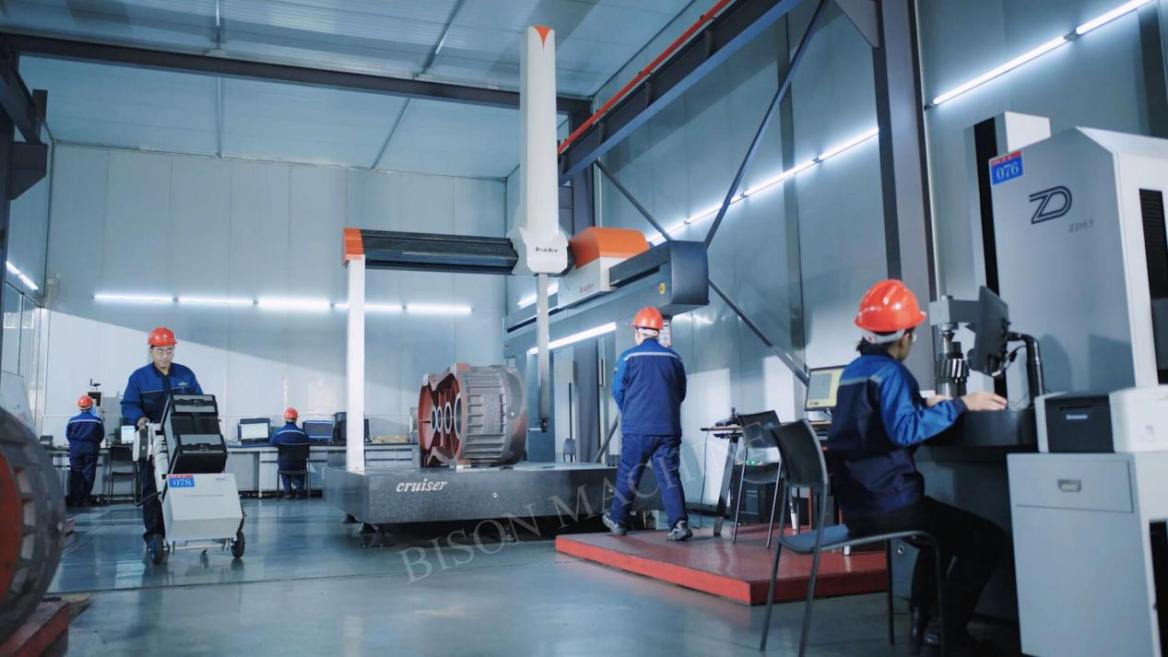
The performance gap between average and best-in-class biomass plants comes down to whether engineering variables are measured, monitored, and managed. Plants that treat pellet production as a system — with feed rate stability, thermal balance, and transmission efficiency as primary control parameters — consistently outperform those that focus only on installed motor capacity. For large-scale operators planning new capacity or upgrading existing lines, the choice of equipment partner determines whether output projections translate into actual delivered tonnage. BISON MACHINE builds its industrial offerings around the variables that genuinely drive plant economics, supported by line integration, commissioning, and spare parts capabilities that extend beyond hardware delivery.
For more information on customized biomass solutions and industrial pellet technology, please feel free to contact us.


