
close
Choose Your Site
Global
Social Media
Views: 155 Author: Site Editor Publish Time: 2026-05-26 Origin: Site


The global shift toward renewable energy has placed Indonesia at the center of the bioenergy conversation. With its vast tropical forests and extensive agricultural landscape, the archipelago generates millions of tons of biomass waste annually. However, the challenge for industrial investors lies not in the availability of raw materials, but in the technical capacity to process these materials into high-density fuel. Selecting a reliable High Efficient Biomass Pellet Mill Supplier represents a critical decision for stakeholders attending the IFMAC woodworking machinery exhibition. Achieving long-term profitability in this sector requires more than just purchasing hardware. It demands a deep understanding of material science and mechanical engineering. Organizations like Shandong Bison Machine provide the necessary technical foundation to bridge the gap between raw waste and premium energy products.

Indonesia is currently undergoing a significant energy transformation. Historically, the nation functioned primarily as an exporter of raw biomass components. Recent policy shifts and national renewable energy targets have incentivized the development of domestic processing facilities. This transition aims to increase the value of agricultural residues such as palm kernel shells, coconut husks, and rubberwood. By converting these materials into pellets locally, Indonesia can satisfy domestic industrial power needs while supplying the premium heating markets in East Asia and Europe.
Investors increasingly recognize that high-volume production is the only way to remain competitive in a tightening global market. The upcoming IFMAC exhibition in Jakarta serves as a pivotal forum for observing these market shifts. High-quality machinery plays a vital role in this evolution. For instance, Bison (Shandong Bison Machine CO., LTD.) focuses on developing systems that handle the high-volume requirements of the Indonesian market. Successful operators now prioritize integrated production lines over standalone units. This strategic shift ensures that every stage of the process, from moisture control to final cooling, contributes to the overall caloric value of the finished pellet.
The Indonesian landscape presents unique challenges for standard pelleting equipment. Palm oil processing residues and rubberwood possess high fiber density and varying moisture levels. Standard horizontal pellet mills often struggle with these materials, leading to frequent clogging and accelerated component wear. Therefore, technical resilience has become the new benchmark for evaluating machinery at IFMAC. Vertical ring die technology has emerged as the preferred solution for these challenging feedstocks.
The vertical design allows for gravity-fed material distribution, which prevents the bridging issues common in horizontal systems. BISON MACHINE utilizes specialized alloy steels for its dies and rollers to withstand the abrasive nature of tropical wood fibers. This engineering approach ensures that the machinery maintains consistent pressure during the compression process. When the material enters the die, the centrifugal force distributes the fibers evenly. This uniformity results in pellets with higher structural integrity and consistent density. Engineers at BISON MACHINE emphasize that material adaptability directly correlates with operational uptime. Without a machine capable of handling diverse biomass types, investors face significant risks of production halts during seasonal feedstock changes.
In the industrial bioenergy sector, the initial capital expenditure often overshadows the more important metric: the return on investment. Professionals in the field advise looking beyond the sticker price of a machine. Instead, they focus on the energy consumption per ton of finished product. High-efficiency motors and optimized transmission systems can reduce electricity costs by 15% to 20% over the lifespan of the equipment. Consequently, the total cost of ownership becomes the primary driver for procurement decisions.
Large-scale operations require robust solutions that can produce between 9 and 12 tons per hour. These 9-12 TPH industrial lines represent the peak of current biomass engineering. Shandong Bison Machine has refined these high-output systems to maximize throughput while minimizing the footprint of the factory. By integrating automated lubrication systems and real-time monitoring sensors, these production lines reduce the need for manual intervention. This automation lowers labor costs and prevents the human errors that often lead to mechanical failure. At IFMAC, astute buyers will evaluate these technical specifications to ensure their projects remain financially viable. A machine that saves 2 kWh per ton processed can generate thousands of dollars in additional profit annually for a large-scale plant.
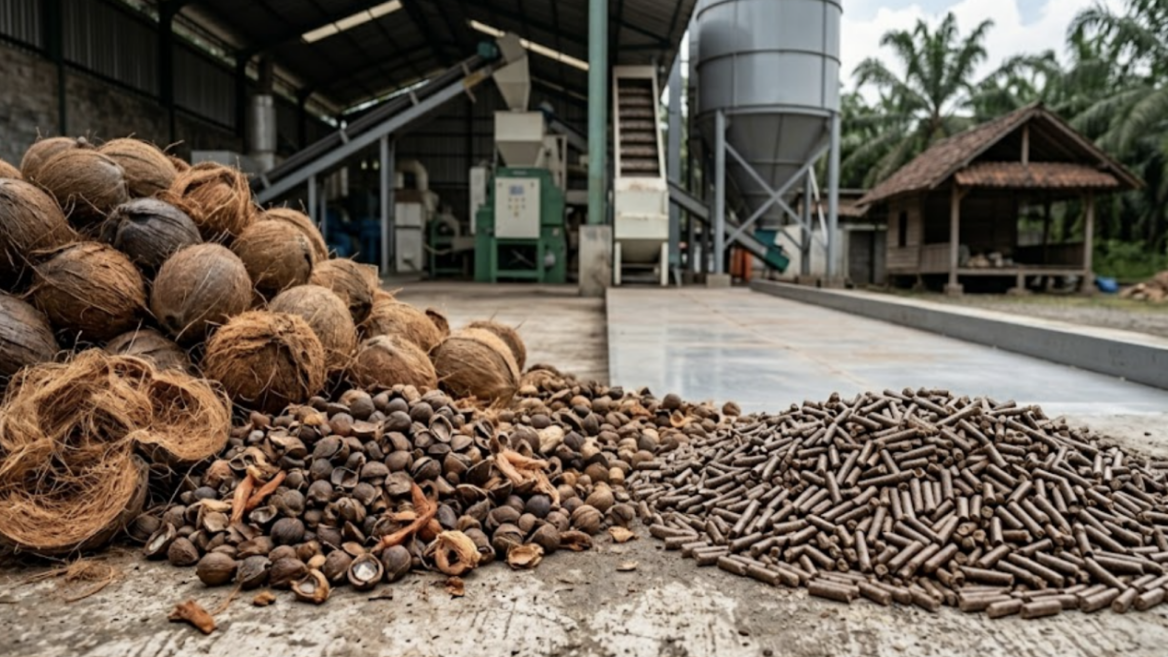
The Service-First Ecosystem: Bridging the Gap Between Chinese Engineering and Indonesian Operations
The success of a biomass project depends heavily on the support ecosystem surrounding the hardware. Industrial equipment operating in tropical climates requires rigorous maintenance and a steady supply of precision-engineered spare parts. Many investors fear that sourcing equipment from overseas might lead to communication delays or technical abandonment. To mitigate these risks, leading providers have established comprehensive service frameworks that cover the entire project lifecycle.
Shandong Bison Machine provides a"one-stop" solutionthat begins long before the first machine arrives at the port. This process includes detailed site analysis, material testing, and customized plant layout design. Once the equipment reaches Indonesia, professional technicians oversee the installation and commissioning phases. More importantly, they provide on-site training for local operators. This transfer of knowledge ensures that the Indonesian workforce can maintain peak performance levels independently. BISON MACHINE (Shandong Bison Machine CO., LTD.) understands that a machine is only as good as the support team behind it. By offering remote diagnostic capabilities and a localized inventory of wear parts like dies and rollers, they ensure that production downtime remains a rarity rather than a regular occurrence.
As the gates open at IFMAC, the sheer variety of equipment can be overwhelming for even experienced investors. Identifying a true turnkey partner requires a systematic approach. Prospective buyers should demand evidence of successful past installations and technical certifications. A reputable manufacturer should be able to demonstrate how their equipment complies with international safety and quality standards, such as ISO 9001 and CE certifications.
During the exhibition, visitors should look for manufacturers who prioritize solution architecture over simple sales. A turnkey provider manages everything from the initial pulverizing system to the final automated packaging unit. This integration eliminates the compatibility issues that often arise when mixing machines from different vendors. BISON MACHINE continues to lead in this space by offering fully synchronized production lines. Their presence at international trade shows highlights their commitment to global quality standards. Choosing a partner that offers transparency in their manufacturing process and clarity in their technical documentation is essential. By focusing on these core pillars—efficiency, adaptability, and service—investors can transform Indonesia's agricultural waste into a sustainable and profitable energy future.
For more information on customized biomass solutions and industrial pellet technology, please feel free to contact us.


