
close
Choose Your Site
Global
Social Media
Views: 169 Author: Site Editor Publish Time: 2026-05-21 Origin: Site


The global push for renewable energy has transformed biomass from a niche alternative into a cornerstone of the industrial power sector. Investors now view wood pellet production as a high-potential asset class that offers both environmental benefits and long-term financial stability. However, the complexity of managing a large-scale pelleting facility often leads to significant variations in the actual return on investment (ROI). Many projects suffer from fragmented procurement strategies that result in mechanical friction and operational bottlenecks. To mitigate these risks, sophisticated stakeholders prioritize a Professional Biomass Pellet Mill One-Stop Solutions provider to oversee the entire technical lifecycle. Manufacturers like BISON MACHINE (SHANDONG BISON MACHINE CO., LTD.) have demonstrated that integrating engineering, equipment, and maintenance under a single framework directly enhances capital efficiency. This unified approach allows mid-sized biomass energy operators, industrial heating suppliers, and regional pellet producers to secure their profit margins by eliminating the hidden costs of system misalignment.

Successful bioenergy projects begin with a precise alignment between raw material characteristics and mechanical specifications. When developers procure equipment from multiple, uncoordinated vendors, they often encounter "the cost of misalignment." For example, a dryer that is not perfectly calibrated to the output of a specific Wood Chipper can cause moisture inconsistencies. These inconsistencies then force the downstream pelleting units to work harder, leading to higher electricity bills and premature wear. Fragmented procurement essentially creates technical silos that require unplanned secondary expenditures to fix.
By contrast, a unified technical strategy acts as a financial safeguard during the initial capital expenditure (CAPEX) phase. BISON MACHINE provides a comprehensive auditing process that ensures every component matches the project's specific throughput goals. This proactive planning prevents the "trial and error" approach that frequently drains the budgets of new facilities. Selecting a partner capable of delivering a Biomass Pellet Production Line as a complete ecosystem ensures that the motors, gearboxes, and control systems function in harmony. Consequently, the investor avoids the sunk costs associated with correcting mechanical imbalances after the plant is already built.
In the industrial pelleting world, uptime is the most critical variable in the ROI equation. Any hour of unscheduled downtime represents a permanent loss of revenue that a facility can never recover. Managing operational expenditure (OPEX) requires a deep understanding of the "mathematics of uptime." High-capacity frameworks, such as the 12-16 TPH Biomass Pellet Production Line, utilize multi-machine synchronization to maximize reliability. The real advantage of distributing production across several pellet mills lies in maintenance flexibility and production continuity — when one unit requires die replacement or scheduled servicing, the remaining machines keep the line running. However, optimizing OPEX requires looking beyond machine redundancy; it demands extending the operational lifespan of critical wear parts within each unit. Ring die wear, for instance, is governed by complex operational variables: feedstock characteristics such as silica content and fiber hardness, the compression ratio of the die, die metallurgy, and operator discipline during start-up and shutdown cycles. Proper engineering specification addresses these wear factors at the design stage, ensures prolonged component life, and reduces the frequency of line interventions.
Systemic reliability further lowers maintenance costs through standardized wear-part logistics. When a facility utilizes a Professional Pellet Solution from a single provider, the inventory of spare parts remains streamlined and predictable. BISON MACHINE (SHANDONG BISON MACHINE) integrates remote diagnostic support to identify potential failures before they result in a total system collapse. This predictive maintenance strategy allows operators to schedule repairs during planned lulls in production rather than during peak demand. Therefore, the savings achieved through reduced emergency repairs and optimized labor costs contribute directly to the project's bottom line.
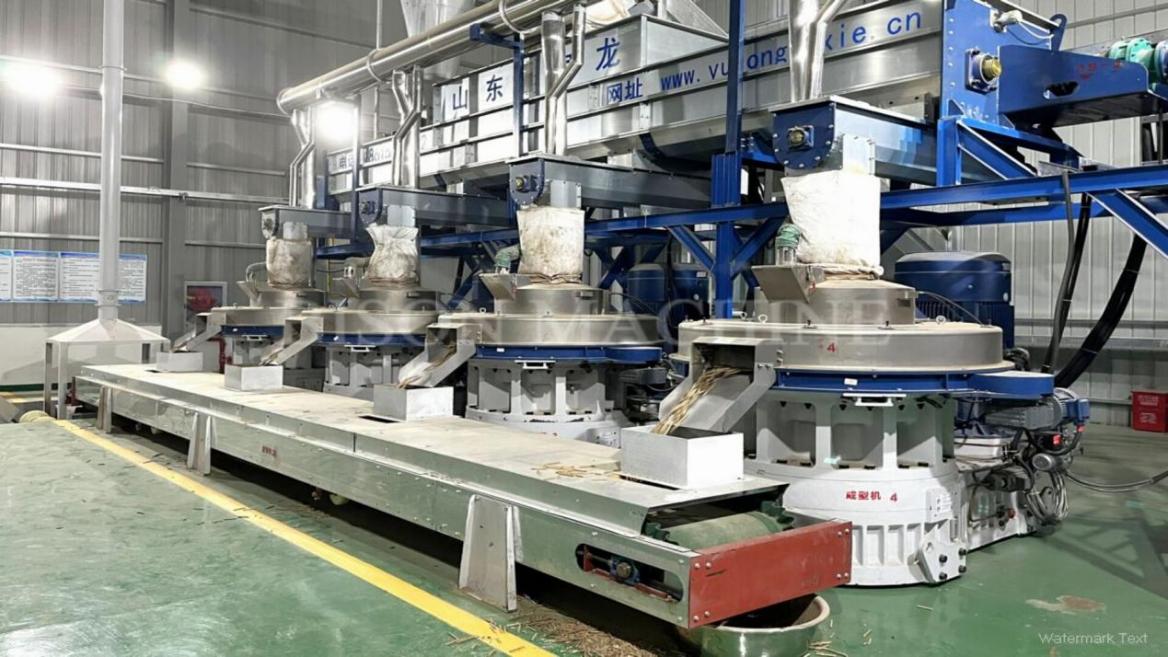
The final profitability of a biomass plant depends on its ability to convert raw feedstock into high-value, market-ready fuel. Conversion efficiency measures the ratio of input material to the final volume of durable, high-density pellets. Low-quality systems often produce an excessive amount of "fines" or dust, which the operator must re-process at a significant energy cost. Professional Pellet Solutions focus on precision engineering to minimize this waste. By optimizing the compression ratio of the XGJ Series Pellet Machine, manufacturers ensure that a higher percentage of the output meets the durability standards required by industrial heating suppliers and regional power producers.
Quality pellets also command a significant market premium. Industrial buyers — including district heating operators, biomass traders, and mid-sized power producers — prefer fuel with consistent caloric value and low ash content, as these factors protect their own furnace infrastructure. Standardized production processes, managed by an integrated solution provider, guarantee this consistency across every ton produced. This level of quality control allows plant owners to secure stable supply contracts and long-term off-take agreements with industrial heating and biomass distribution clients.
Time-to-Market Advantage: Accelerating the Payback Period through Turnkey Execution
The internal rate of return (IRR) of a project is highly sensitive to the duration of the construction and commissioning phase. Every month spent in assembly is a month of capital sitting idle without generating cash flow. One-stop solutions eliminate the technical silos that typically delay plant commissioning by managing all logistical and technical interfaces internally. SHANDONG BISON MACHINE CO., LTD. provides a turnkey execution model that accelerates construction velocity significantly. By coordinating the arrival of the Auxiliary Equipment with the core machinery, the provider ensures a seamless installation process.
Shortened lead times have a profound impact on capital recovery. A facility that enters production 60 days ahead of schedule can generate substantial early revenue, which helps to pay down debt interest faster. Furthermore, the "first-time right" installation approach reduces the need for extensive post-commissioning adjustments. BISON MACHINE ensures that the 12-16 TPH framework is fully optimized for the local environment before the first pellet is even pressed. This commitment to execution speed and accuracy transforms the bioenergy facility into a high-performance investment with a significantly shortened payback period.
The evolution of the biomass industry has proven that operational stability is the ultimate driver of financial growth. As global demand for sustainable fuel continues to rise, the margin for error in production has narrowed. Investors must choose partners who can transform mechanical hardware into a coordinated, profit-generating system. BISON MACHINE stands at the forefront of this shift by offering comprehensive industrial solutions that prioritize ROI. By focusing on de-risking capital investment and optimizing conversion efficiency, leading providers allow bioenergy assets to reach their full financial potential.
Ultimately, the pursuit of peak efficiency is a collaborative effort between the energy producer and the technology architect. Systematic integration provides the foundation for a resilient energy infrastructure that can withstand market fluctuations. Those who invest in professional, one-stop solutions position themselves as leaders in the green energy transition. By leveraging the engineering precision and lifecycle support of BISON MACHINE (SHANDONG BISON MACHINE), stakeholders ensure that their facilities contribute both to a cleaner planet and a healthier balance sheet. The future of bioenergy ROI belongs to those who recognize that the total system is always greater than the sum of its parts.
For more information on customized biomass solutions and industrial pellet technology, please feel free to contact us.


