close
Choose Your Site
Global
Social Media
Views: 1325 Author: Site Editor Publish Time: 2024-12-29 Origin: Site


This 30,000 TPY biomass pellet production line is designed to process raw logs and waste wood containing metal materials into biomass pellets. Considering the different characteristics of these two raw materials, the production line features specially designed pretreatment routes to meet their respective processing requirements.
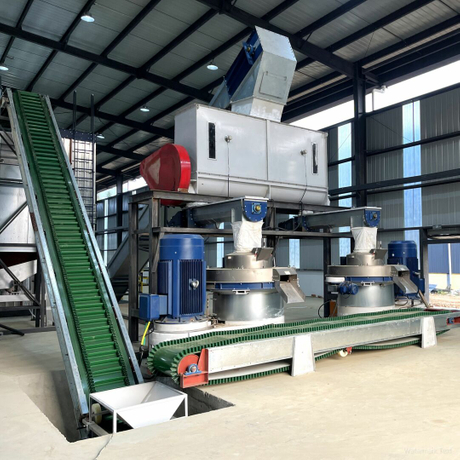
After pretreatment, both material streams converge at the hydraulic silo before entering the shared pelletizing section. The production line is equipped with a wood chipper, screening equipment, an integrated crushing and grinding machine, a rotary dryer, hydraulic silo, two XGJ850 pellet machines, a skin series cooler, and packaging machine.
With separate pretreatment routes and a shared downstream production section, this system provides a practical solution for processing different types of wood materials and producing biomass pellets.
| Item | Details |
| Raw Material | Wood & Waste wood containing metal |
| Production Capacity | 30,000 TPY |
| Main Pellet Machines | 2 × XGJ850 Pellet Machines |
| Final Product | Biomass Fuel Pellets |
The wood chipper is used to process raw logs into wood chips, reducing their size for subsequent screening and processing. This is the first stage of the raw log processing route and prepares the material for the following production steps.
The wood chips are fed into the screening equipment after chipping. The equipment separates wood chips by size, preparing the material for the subsequent drying process before it is transferred to the hydraulic silo.
Hydraulic silos are installed at key points in the production line to provide temporary material storage and coordinate the transfer between processing equipment. In the raw log processing route, a hydraulic silo is positioned before the rotary drum dryer to support smooth material handling and production continuity.
In the raw log processing route, the screened wood chips are temporarily stored in a hydraulic silo before entering the rotary dryer. The dryer reduces the moisture content of the material, preparing it for the subsequent crushing and pelletizing stages.
The hammer mill further crushes the wood chips into smaller material, preparing them for subsequent biomass pellet production. It plays an important role in reducing the material size and helping provide a more suitable feedstock for the pelletizing process.
Waste wood containing metal materials is processed separately by the integrated crushing and grinding machine. After processing, the material is transferred to the hydraulic silo before pelletizing, where it joins the processed raw log material for the next stage of production.
The processed raw log material and the waste wood processed by the integrated crushing and grinding machine are brought together in this bin before entering the pelletizing section. This arrangement helps coordinate material supply and supports continuous production.
Before pelletizing, the processed materials from both raw material routes enter the hydraulic silo, which serves as a common feeding point for the pellet machines. It provides temporary material storage and helps coordinate the supply of material to the pelletizing equipment, supporting a continuous and stable feeding process.
The production line is equipped with two XGJ850 pellet machines, designed for a production capacity of 6–8 TPH. After the two material streams converge in the hydraulic silo, the prepared material is fed into the pellet machines and compressed into biomass pellets.
As the core equipment of the production line, the two pellet machines play a key role in the pelletizing process. Actual production capacity depends on raw material characteristics, moisture content, and operating conditions.
After pelletizing, the newly formed biomass pellets are transferred to the skin series cooler. Cooling helps lower pellet temperature and improve stability before the finished products enter the packing stage.
After skin series cooler, the finished biomass pellets are transferred to the packaging section. The pellets are packaged for subsequent storage, transportation, and use, completing the main production process.
The production line is designed with two separate raw material processing routes that converge before pelletizing. This arrangement allows raw logs and waste wood containing metal materials to undergo their respective pretreatment processes before entering the shared production section.
Raw Logs → Wood Chipper → Screening Equipment → Hydraulic Silo → Rotary Dryer → Hammer Mill → Hydraulic Silo Before Pelletizing
Waste Wood Containing Metal Materials →Integrated Crushing and Grinding Machine → Hydraulic Silo Before Pelletizing
Hydraulic Silo Before Pelletizing → Two XGJ850 Pellet Machines → Skin Series Cooler→ Packaging Machine → Finished Biomass Pellets
For the raw log route, the logs are first chipped and screened. The screened wood chips are then temporarily stored in a hydraulic silo before entering the rotary dryer. After drying, the material is crushed and transferred to the hydraulic silo before pelletizing.
For the waste wood route, waste wood containing metal materials is processed by the integrated crushing and grinding machine before being transferred to the same hydraulic silo.
Once both material streams converge, the prepared material is fed into the two XGJ850 pellet machines. The formed pellets are then cooled and packed to complete the production process.
This 30,000 TPY biomass pellet production line is designed to process raw logs and waste wood containing metal materials through two separate pretreatment routes. By combining separate raw material preparation with centralized downstream processing, the line provides a practical solution for customers handling different types of wood materials.
BISON MACHINE provides biomass pellet production equipment and customized production line solutions based on customers' raw materials, capacity requirements, and site conditions. Contact us to discuss your project requirements and find a suitable solution for your biomass pellet production needs.